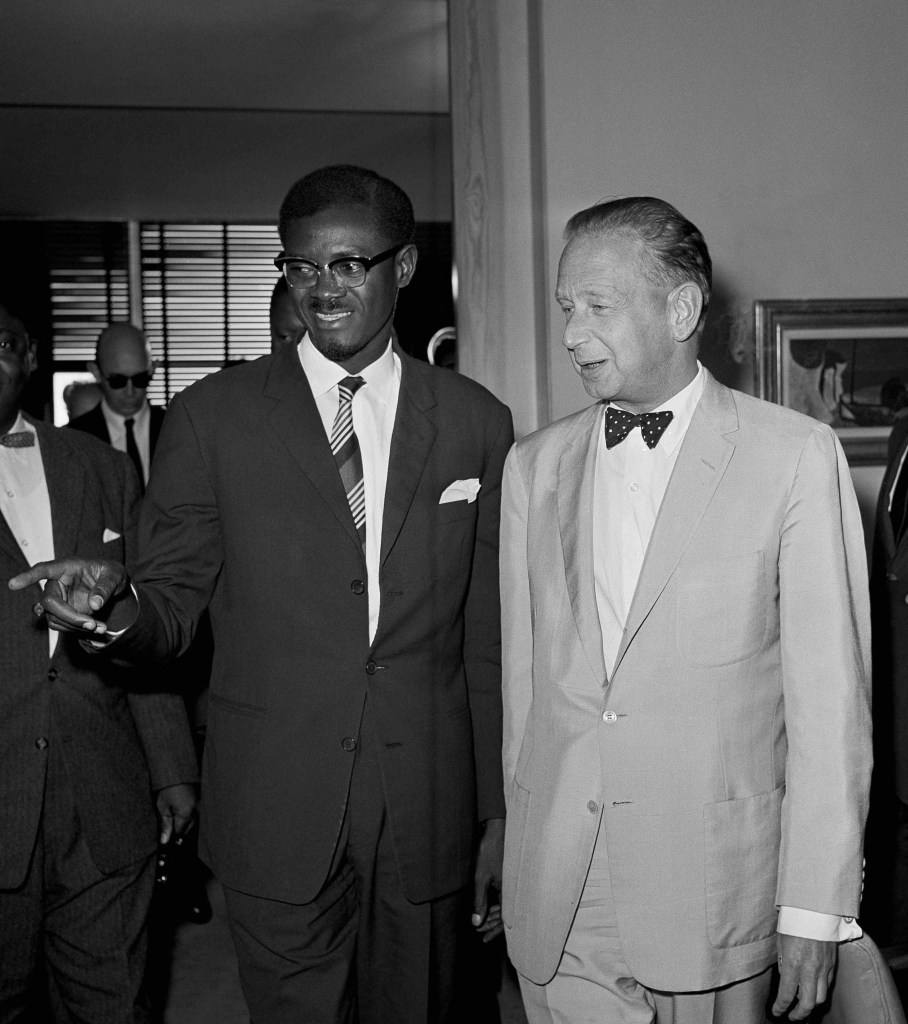
In the early 1960s, two men—Patrice Lumumba and Dag Hammarskjöld—found themselves at the center of one of the most volatile moments of the twentieth century.
They were very different in temperament, background, and role. But both found themselves in the same storm: the crisis that followed the newly independent Congo’s break from colonial rule.
Today, many accounts link their names in simplified ways, framing the story in terms of blame or failure. But to understand what actually happened, it’s necessary to step back and look at the reality they were navigating at the time.
A Country in Crisis
When Congo gained independence in 1960, it did not emerge into stability. It entered a period now known as the Congo Crisis—a moment marked by internal divisions, regional breakaways, and intense international pressure shaped by the Cold War.
Authority within the country was not unified. Power was contested. Loyalties shifted. The situation on the ground was not just unstable; it was constantly changing.
For leaders inside Congo, including Lumumba, the urgency was immediate and existential. The survival of the nation was at stake.
For those outside Congo, including the United Nations, the challenge was different: how to assist without escalating an already fragile situation into something even more dangerous.
What Lumumba Needed—And What the UN Could Offer
Lumumba sought decisive support. From his perspective, Congo required strong, immediate action to maintain unity and resist external interference.
The United Nations, under Hammarskjöld, operated under a different set of constraints.
The UN was not a sovereign power. It could not act unilaterally or take sides in the way a nation-state might. Its mandate required neutrality, even in situations where neutrality was difficult to maintain. Every decision carried the risk of intensifying Cold War tensions between global powers already watching closely.
This created a fundamental tension:
Lumumba was operating in a reality of urgency. The UN was operating in a reality of limitation.
Neither of these positions existed in a vacuum. Both were shaped by the structures surrounding them.
What the United Nations Was Actually Doing
Much of the modern conversation focuses on high-level political decisions—what should have been done, or what was not done.
What is often overlooked is the scale of the United Nations’ presence on the ground.
UN operations in Congo were vast and varied: food deliveries, transportation, agricultural consulting, telecommunication repairs, and even efforts to stabilize the treasury.
There were health workers, educators, foreign trade advisors, and specialists in water purification, working across the country to support a newly independent nation under immense strain.
They were doing everything they could to help the people of Congo.
But with a government fractured and at war with itself, a deeper question remained: Could any of this assistance reliably reach the people it was intended to help?
And if it could not, how would those efforts be remembered?
The Limits of Control
As the crisis unfolded, events began to move beyond the control of any single individual.
Decisions were being made not only within Congo, but across multiple governments, interests, and actors—many of them operating with their own priorities.
By the time Patrice Lumumba’s fate was sealed, the situation had become larger than any one leader, inside or outside the country, could fully direct.
This is often where historical narratives become simplified. Complex systems are reduced to individual responsibility. Outcomes are traced back to single decisions.
But the reality on the ground was far more diffuse.
Dag Hammarskjöld’s Position
At the center of the international response was Dag Hammarskjöld.
His role required him to hold together not just a mission, but the idea that international cooperation could function at all under extreme pressure.
He was navigating:
- A fractured nation
- Competing internal factions
- Global superpower tensions
- The structural limits of the United Nations itself
All while attempting to maintain a principle that was easy to state, but difficult to execute: that the UN should act in the interest of peace without becoming an instrument of any one power.
It was a narrow path—one that left little room for error, and even less room for clarity in hindsight.
A Different Way to Understand the Question
It is tempting to ask whether one person failed another. Whether different choices might have changed the outcome.
But a more revealing question may be this:
What can leadership actually accomplish in a moment where control itself is fractured?
In Congo, both Lumumba and Hammarskjöld were operating within constraints that shaped—and limited—their options.
One acted from urgency within a nation struggling to define itself. The other acted from restraint within an international system designed to prevent escalation.
Both were responding to the same crisis, from different positions within it.
Two Men, One Moment
Patrice Lumumba and Dag Hammarskjöld did not stand on the same ground, but the same moment in history shaped them both.
One represented the fierce immediacy of independence. The other, the measured effort to stabilize a world on edge.
Neither man can be fully understood in isolation from the conditions surrounding him.
And perhaps the most difficult truth is this: Not every tragedy traces back to a single point of failure.
Some emerge from situations where the forces at play exceed what any one person—or any one institution—can resolve.
Frequently Asked Questions
What was Dag Hammarskjöld’s role in the Congo Crisis?
Dag Hammarskjöld, as UN Secretary-General, oversaw the United Nations’ peacekeeping and stabilization efforts in Congo following its independence in 1960. His role involved coordinating humanitarian aid, deploying UN forces, and attempting to maintain neutrality amid intense Cold War pressures and internal conflict within Congo.
Did the United Nations support Patrice Lumumba?
The United Nations provided assistance to Congo as a whole but did not align itself with any single political leader, including Patrice Lumumba. Under Hammarskjöld, the UN operated under a mandate of neutrality, which limited its ability to intervene directly in internal political disputes.
Why didn’t the UN stop Lumumba’s death?
By the time events escalated, multiple internal and external actors had already fragmented authority within Congo and reshaped its direction. The UN’s mandate and structure limited its ability to intervene in specific political outcomes, particularly in a rapidly deteriorating and complex situation.
What did the UN actually do in Congo?
UN operations in Congo included food distribution, transportation, agricultural support, telecommunications repair, economic stabilization efforts, and public health initiatives. These efforts were extensive but often complicated by the country’s internal instability.

Explore more:
- Why Did Dag Hammarskjöld’s Plane Crash in 1961?
- Remembering Dag Hammarskjöld: His Life, Legacy, and Enduring Relevance
- The Summer of Hell: Dag Hammarskjöld in 1961
- The Final Flight: Reflecting on Dag Hammarskjöld’s Tragic Death and Enduring Legacy
New to Dag’s life and legacy? Start here.
You can purchase Sara’s award-winning biography Decoding the Unicorn: A New Look at Dag Hammarskjöld on Amazon by clicking here! Her forthcoming project, Simply Dag, will release globally on July 29th.
Enter the private room for readers who look beyond the surface.  Join the Unicorn Dispatch newsletter here: https://sara-causey.kit.com/2d8b7742dd.
Photo credit: Premier Patrice Lumumba, left, of the Congo Republic chats with U.N. Secretary General Dag Hammarskjold at Untied Nations, July 25, 1960 after 2½ hour meeting. He will meet today with Hammarskjold and members of the U.N. Security Council. Lumumba is seeking trained personnel to help get his chaos-ridden nation back on its feet. AP Photo. (Used with paid license.)