For better or worse, media narratives shape how we see the world. They tell us who the “heroes” and “villains” are, who should be trusted, and who should be questioned. But what happens when the media gets leadership wrong?
Few figures exemplify this better than Dag Hammarskjöld. As the second Secretary-General of the United Nations, he was tasked with leading the world through one of its most volatile periods. He was a man of deep intellect, ethical conviction, and quiet strength. Yet, despite his undeniable impact, the press often misunderstood and misrepresented him. Some saw him as too detached, too cerebral—an ivory-tower intellectual who didn’t play politics the way they expected. Others portrayed him as shy, incompetent, and cowardly. But those who truly understood him knew better.
The Problem with Simplified Narratives
Media thrives on simplicity. It rewards bold personalities, quick soundbites, and easily digestible stories. But great leadership—especially the kind that Dag embodied—is often nuanced, deliberate, and complex. That doesn’t make for eye-catching headlines, and so, instead of recognizing the depth of his leadership, the press often flattened him into a stereotype: an enigmatic bureaucrat, a distant philosopher, or, during his most challenging days, an isolated figure who didn’t inspire loyalty. These portrayals were not only inaccurate but also harmful.
Dag wasn’t detached; he was measured. He wasn’t weak; he was strategic. He wasn’t an idealist disconnected from reality; he was pragmatic, but he refused to compromise on ethical leadership. His private reflections in Markings show a man who felt the weight of his responsibilities and who understood leadership not as an exercise in power, but as a calling to serve.
The Dangers of Media Misrepresentation
When the media misrepresents a leader, it doesn’t just distort how we view that individual—it shapes how we think about leadership itself. If a leader is only celebrated when they are loud, performative, and reactive, what does that teach us about the kind of leadership we should value? Dag’s story reminds us that some of the best leaders are the ones who aren’t always in front of the cameras, who don’t rely on theatrics, and who lead with principle rather than self-promotion.
It also raises the question: how many great leaders are overlooked or torn down because they don’t fit the media’s preferred mold? How many thoughtful, ethical, and quiet leaders have been dismissed in favor of those who thrive on controversy and spectacle?
My Current Project
As I work on my current project, Simply Dag, one of my goals is to correct the record. To tell the deeper, richer story of Dag—the one that goes beyond the newspaper headlines and diplomatic dispatches. Because the truth is, leadership isn’t about who dominates the conversation. It’s about who shows up, who makes difficult decisions with integrity, and who is willing to stand firm even when the world misunderstands them. Dag’s legacy is more important and relevant than ever and he deserves to be seen through a lens that’s not tainted by what author Peter Dale Scott referred to as “deep politics.” As citizens, we need to ask ourselves: are we celebrating the right qualities in leadership? And if not, what are we willing to do to change that?
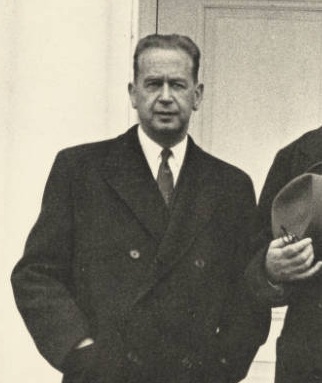
Photo: Dag at Ohio University, 1958. (Richard R. Lippincott, image courtesy of OU.)